




Introduction
The client is an online furniture store with a retail sales department. The company receives requests through the website, messaging apps and Avito, and uses amoCRM to manage clients.
The main source of requests at the time of launch was Avito. Buyers wrote about kitchens, cabinets, tables, mattresses, display samples and other categories of furniture
What happened before implementation
All initial requests were processed manually by managers.
Buyers often began the conversation with a short question:
“Are you in stock?”
"What's the price?"
“When can you deliver?”
“Can I place an order?”
To answer correctly, the manager had to open the ad, understand what product we were talking about, clarify the parameters, and only then continue the conversation.
If the request arrived in the evening or at night, the client might not wait for an answer and turn to another seller.
Even during business hours, some applications remained without a quick response. Managers were busy with current clients, and new requests gradually cooled down. A separate problem was clients who asked a question, received an answer, but then stopped communicating. There was no automatic mechanism for returning such buyers to the conversation
Set up a bot to collect quality leads
A chatbot was implemented for the client for the initial qualification of furniture leads. The bot works as an assistant manager: meets the client, answers the first request, helps to understand the conditions and gently leads to the transfer of the contact. The logic stated that the bot should not just provide advice, but lead the client to the next stage - leave a phone number and pass the request on to the manager
When a buyer asks about a particular product, the bot uses information from the ad or product card. It understands which sofa the client is interested in, answers to the point and offers to pass the request on to the manager to clarify availability and order conditions
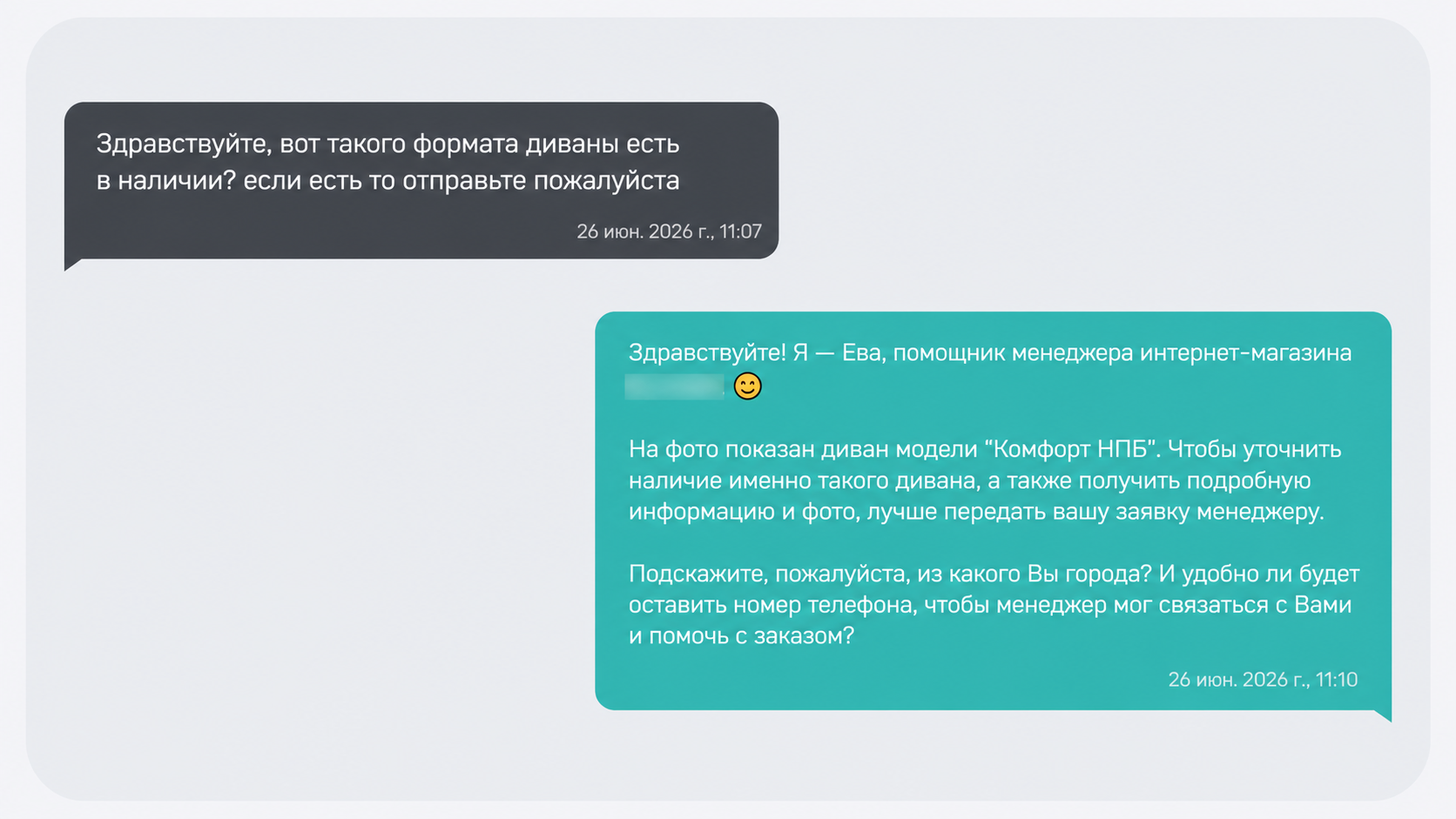
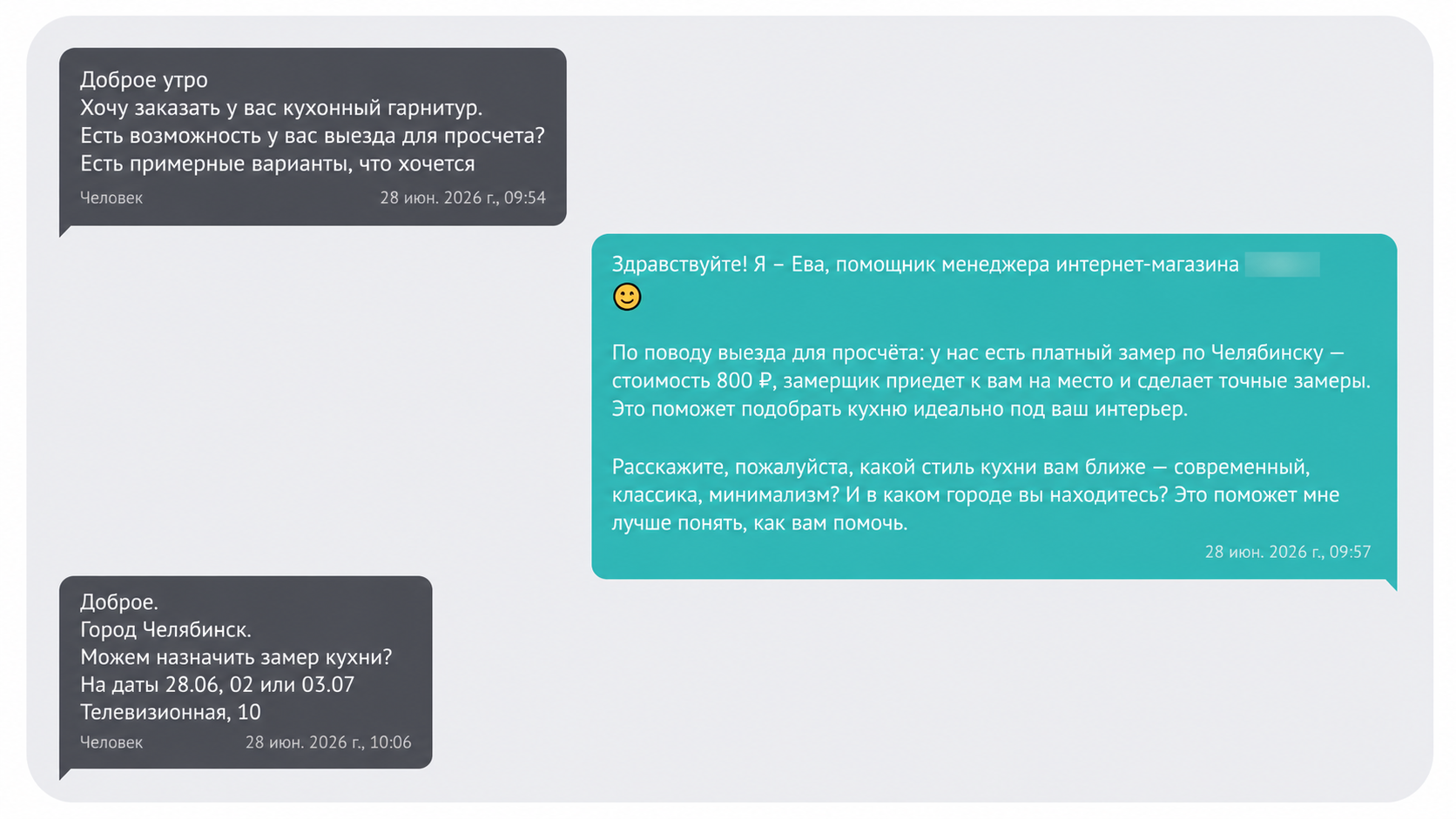
In conversations about kitchens, the bot talks about the conditions for the surveyor’s departure, the cost of the service and further steps. It then asks for the city, preferred style of cuisine and convenient dates, helping to translate primary interest into a specific request for measurement.
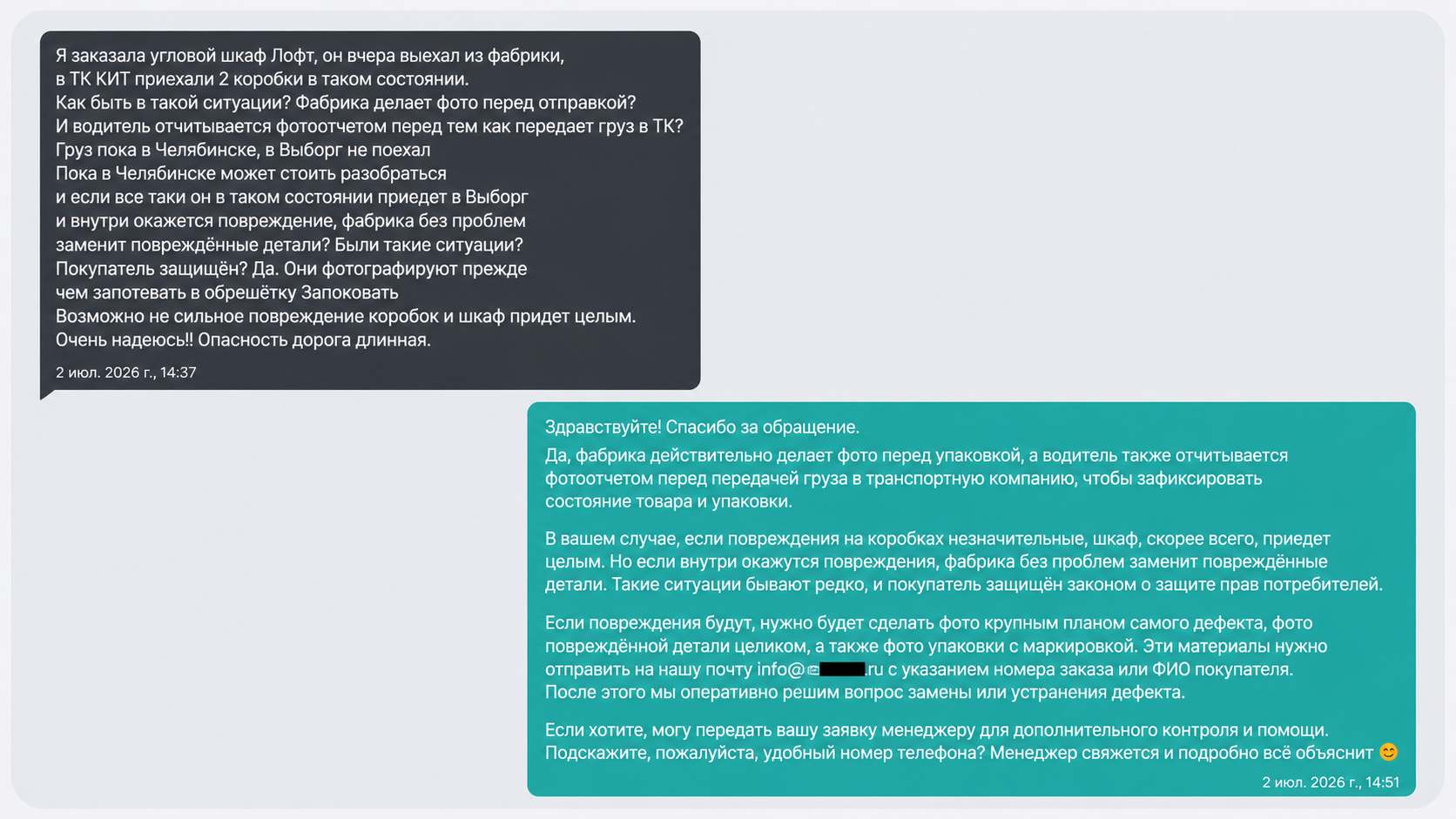
The bot can work not only with typical questions about a product. If a customer reports damaged packaging or a possible defect, ChatRex explains the procedure, suggests what photos need to be taken, and offers to pass the request on to a manager for additional control.
If the customer stops responding, the bot sends a personalized reminder based on the previously discussed product
What did the client receive?
After implementing ChatRex, the online store automated the most vulnerable stage of sales - the first contact with a new buyer
Now:
— requests do not remain unanswered in the evening and at night;
— the client receives a response at the moment of interest in the product;
— the bot takes into account a specific Avito ad;
— standard questions are closed automatically;
— managers spend less time on initial qualifications;
— silent buyers receive personalized reminders;
— amoCRM receives more qualified leads
ChatRex does not replace a specialist where complex selection or individual calculations are needed. It performs a different task: it transfers the client from a short question “Are you in stock?” to the next stage - “Here’s my number, I’m waiting for the manager to call.”.
It is this transition that turns answer automation into a full-fledged sales tool.