



Introduction
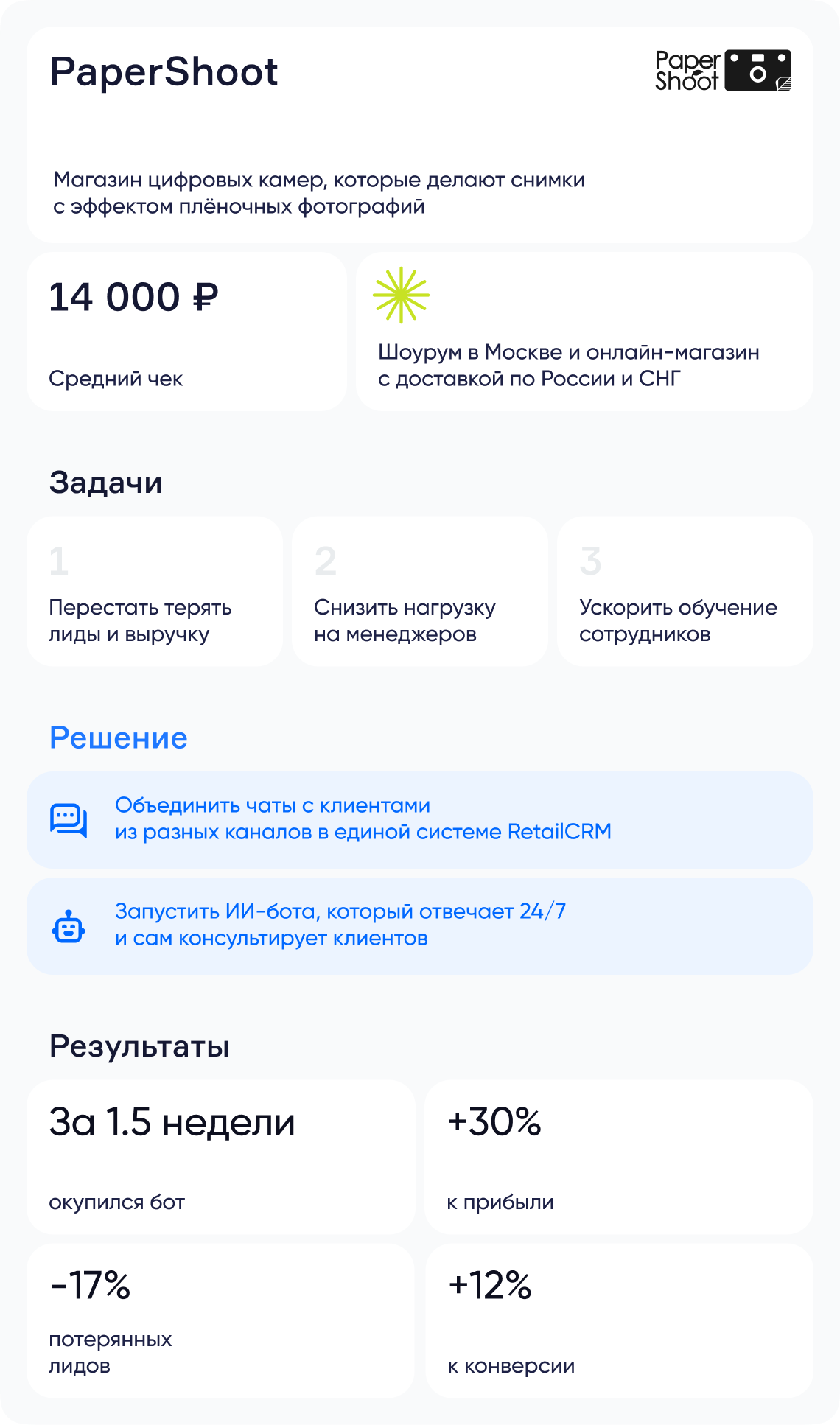
Digital camera store PaperShoot focuses on customer service: quickly delivers goods throughout Russia and the CIS, advises and helps set up the camera after purchase.
But as orders grew, weaknesses became noticeable. Employees did not respond to chats after hours and on weekends, so customers could wait 4–12 hours for a response. Because of this, some leads were lost, and the store received less revenue.
To solve this problem, the company set up an AI bot from ChatRex and within a month I saw results - a 30% increase in revenue and 17% fewer lost leads. In the case, we tell you how an AI bot collects applications and advises potential clients 24/7, what else it can do, and how exactly it helps increase order conversion.
We set up processes, reduced routine and simplified the work of managers in RetailCRM
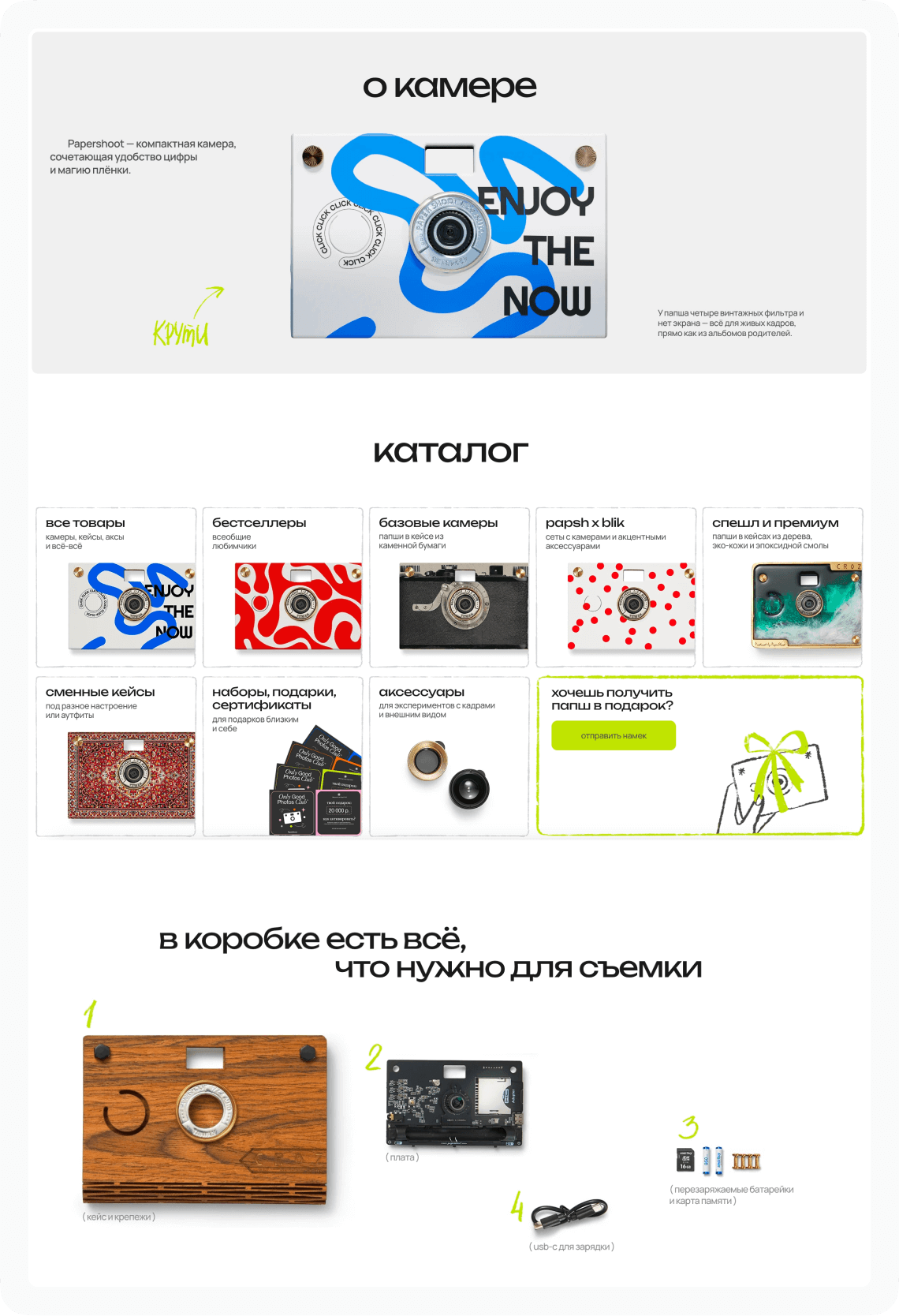
PaperShoot sells one camera model, but with different designs and body materials. There are basic models made of stone paper, “Special” models made of leather and cork, and “Premium” models made of wood and epoxy resin.
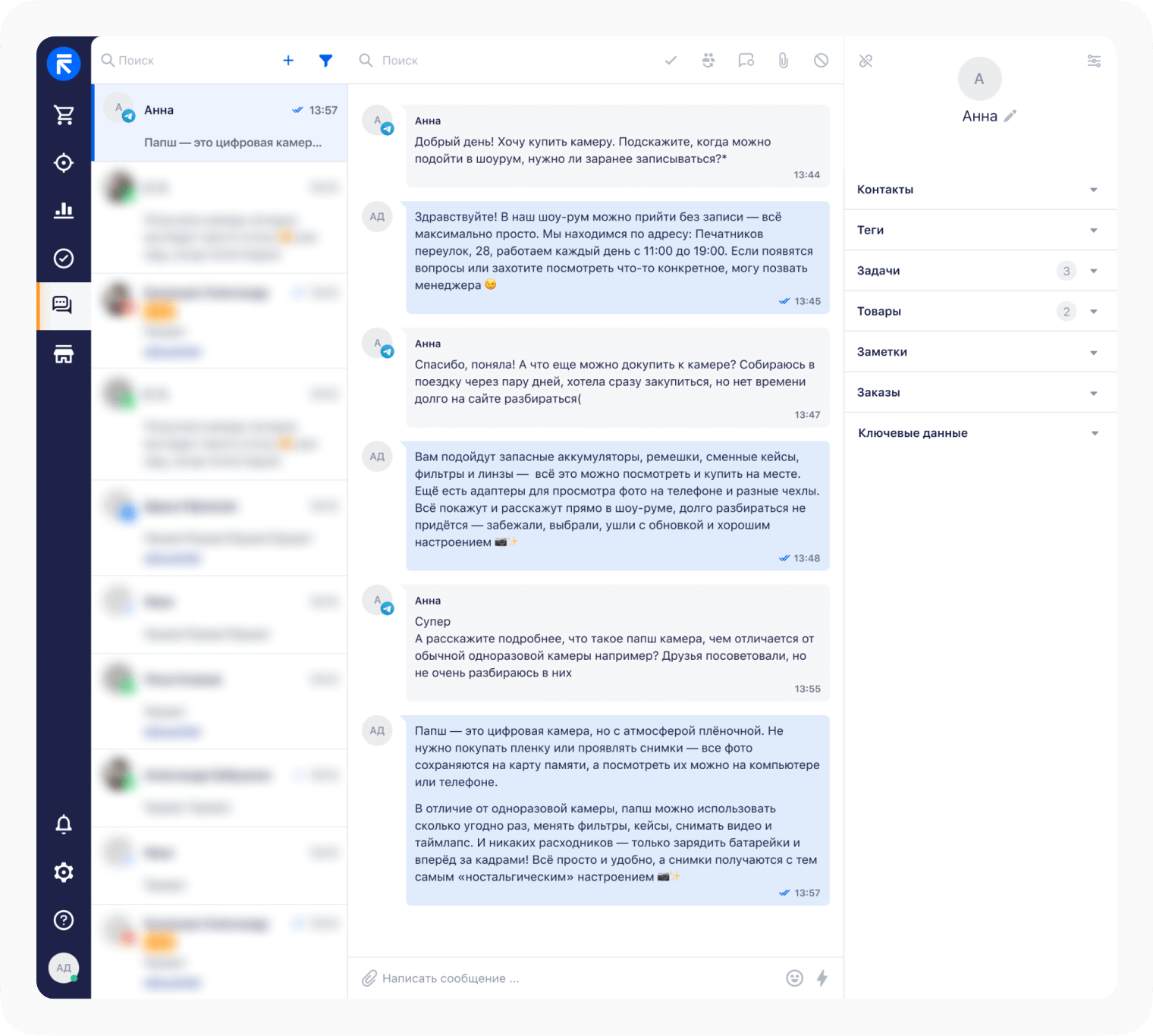
PaperShoot accepts online orders from VKontakte, WhatsApp*, Telegram and other messengers. To avoid switching between different applications, the company integrated all three services with RetailCRM.
Now all messages from social networks and messaging apps are automatically entered into the system and displayed in a single window.
In RetailCRM it looks like this:
The system can also simplify the work of managers:
- Automatically distribute new requests depending on the employee’s workload and work schedule.
- Collect ready-made answers to frequently asked questions.
- Set reminders - for example, contact the client and ask for feedback.
- Set tasks - request payment or make a repeat touch.
- Quickly find the desired conversation by tag or keyword.
Automated routine tasks so managers could focus on sales
As soon as all channels were combined in one window, the company conducted an audit of the sales department. The analysis showed what could be improved:
- Stop losing leads - and, as a result, revenue. Managers did not respond during non-working hours and weekends, so the average wait time was 4–12 hours. Because of this, people left for competitors.
- Reduce the burden on managers. For example, automate answers to similar questions so that employees can focus on warm leads and large B2B customers.
- Accelerate employee training. The store's catalog contains many variations of cameras and accessories - this delayed the adaptation process.
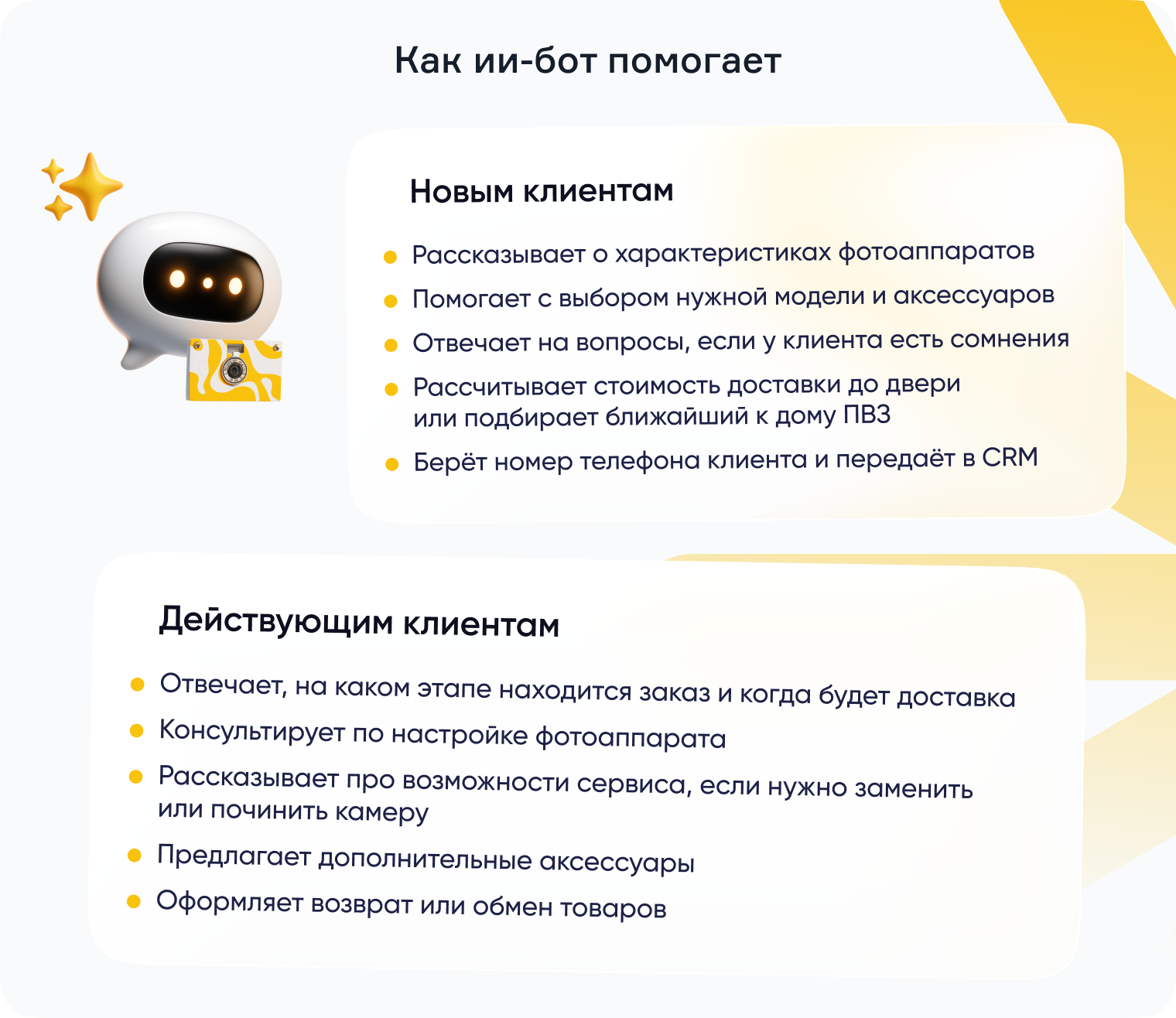
Provided customer service 24/7
The bot also helped solve the problem with long responses. Now the store communicates with customers at any time of the day. A person immediately sees what the bot can help with and at what time the manager can connect. This way, customers feel calmer and are less likely to go to competitors.
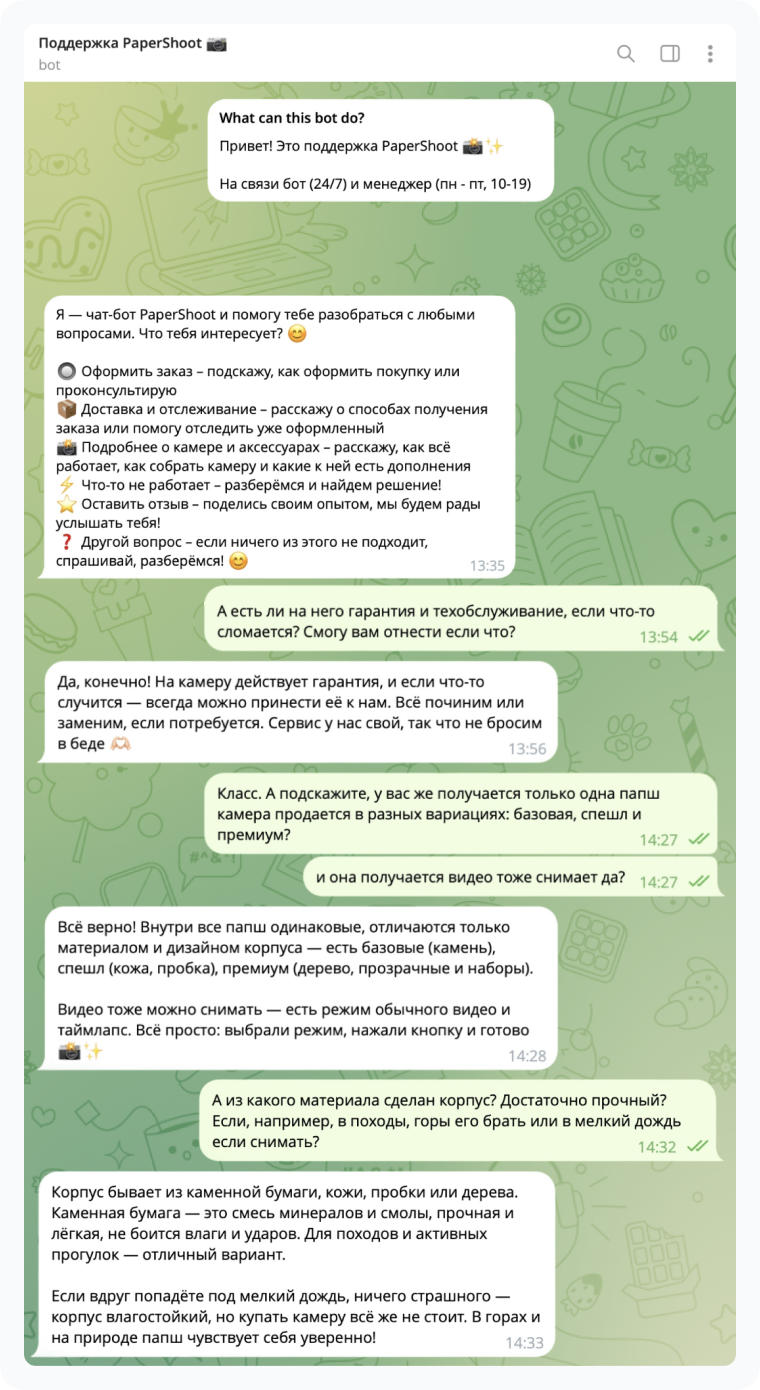
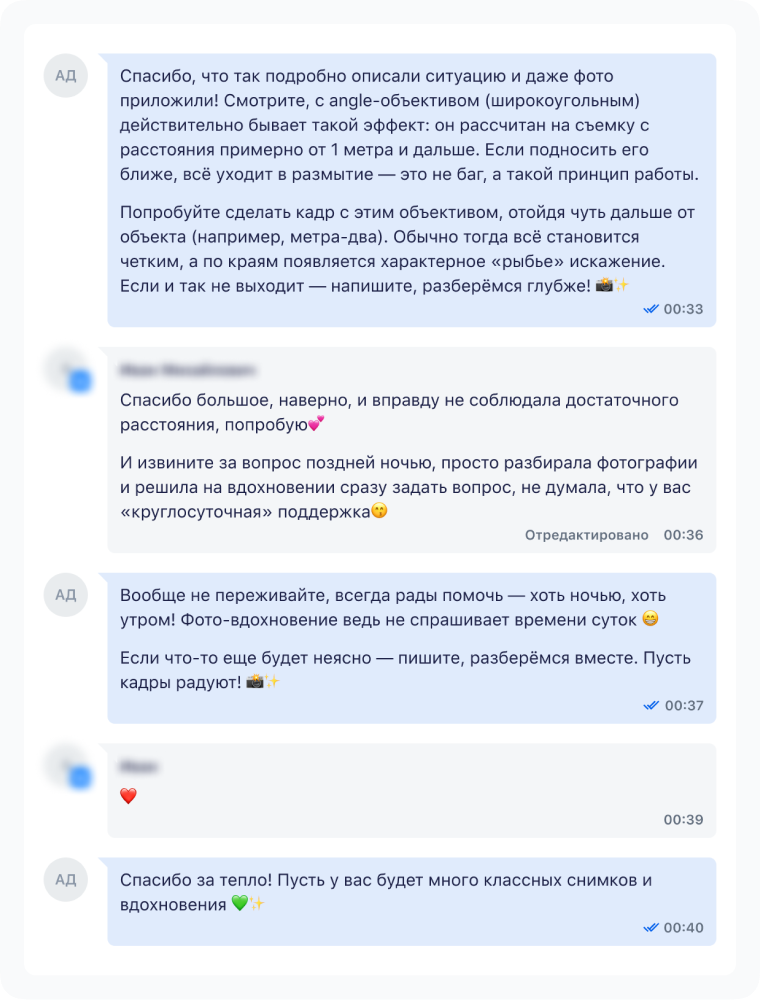
During the correspondence, the AI bot advises on the product, works with objections, talks about the service and helps set up the camera. It can also give detailed advice on shooting. For example, how to properly use a wide-angle lens and take photos without blur.
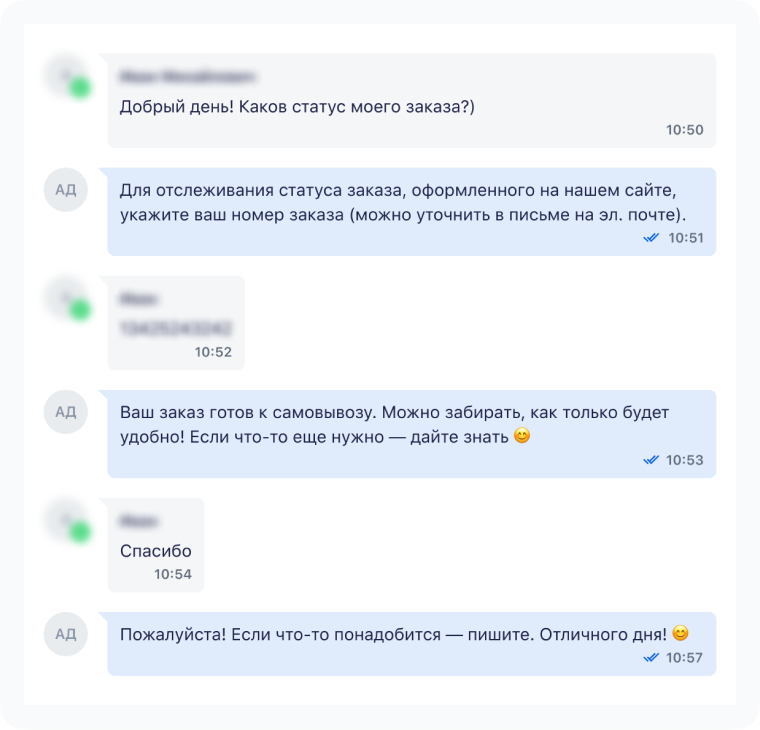
The bot can also quickly answer what stage the order is at. And thanks to integration with Boxberry, it can arrange delivery and calculate its cost, find the pickup point closest to the client and notify when the parcel will be delivered. The bot receives all the necessary information from RetailCRM.
We taught the bot to identify warm leads and transfer them to managers
The AI bot itself understands when the client is ready to buy and redirects them to a manager. It happens like this: the bot puts it in RetailCRM task, and the system sends an alert to the employee.
It also handles in situations with a high risk of missing a deal or getting negative feedback from a client. The bot switches the conversation to the manager if:
- A B2B customer with a high check or a partner with a lucrative offer writes into the conversation.
- There is an atypical negative reaction from a client that only an employee can resolve.
We implemented the bot in a few weeks and paid for it in 10 days
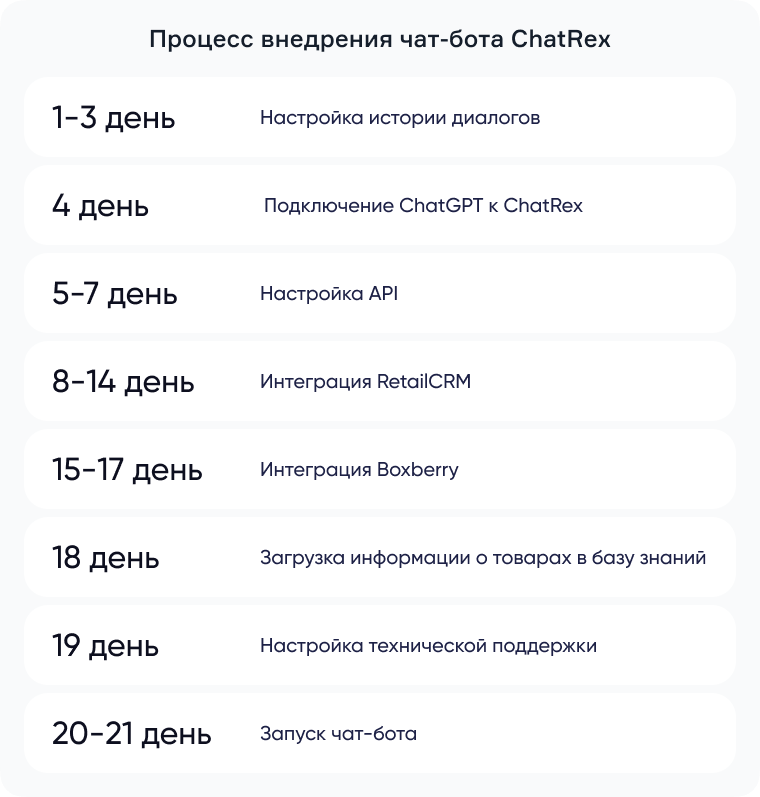
On average, setting up an AI bot from ChatRex takes 21 days. During this time, you can teach the bot to understand the context of correspondence, answer complex technical questions and integrate it with the necessary services. And at the end, test the system and train the team.
Results per month of use
Within a month of using the bot, the company received the following results:
Increase in conversion from 12 to 14%
Reduced lead loss from 25% to 8%
Average response time on non-working days and weekends